Día de los Muertos and the Power of Remembering
What This Beautiful Tradition Can Teach Us About Grief, Mental Wellness, and Hope
Every culture has its own way of honoring those who came before us. In many Mexican families, Día de los Muertos (Day of the Dead) is a tradition rooted in love, remembrance, and the belief that those we have lost continue to shape who we are. Rather than focusing on a common fear of death, the holiday invites families to celebrate life through the stories, values, traditions, and relationships that continue across generations.
For Touchstone Foundation Programs Manager Yakahiris Vazquez, Día de los Muertos holds deeply personal meaning. As a first-generation American navigating two cultures, she has found that preserving this tradition offers an opportunity to connect with loved ones, honor her family’s history, navigate grief, and reflect on the importance of slowing down to appreciate life.
Through Yakahiris and her family’s accounts, we explore how preserving cultural traditions we can support emotional wellness, strengthen family connections, and help young people develop a sense of identity and belonging.
Understanding Día de los Muertos: A Celebration of Life and Remembrance
Observed annually on November 1 and 2, Día de los Muertos brings together Indigenous Mexican traditions and Catholic observances of All Saints’ Day and All Souls’ Day.
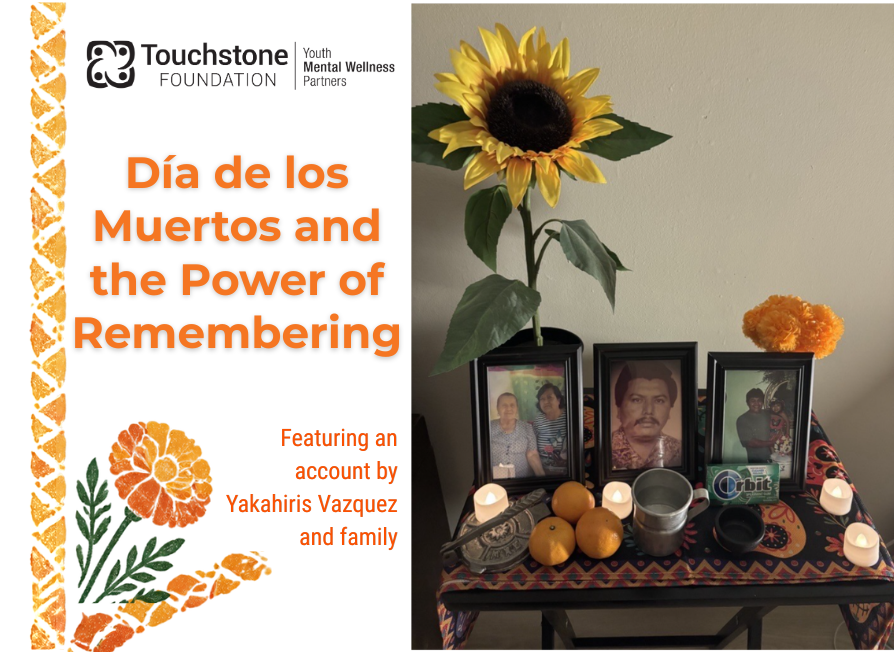
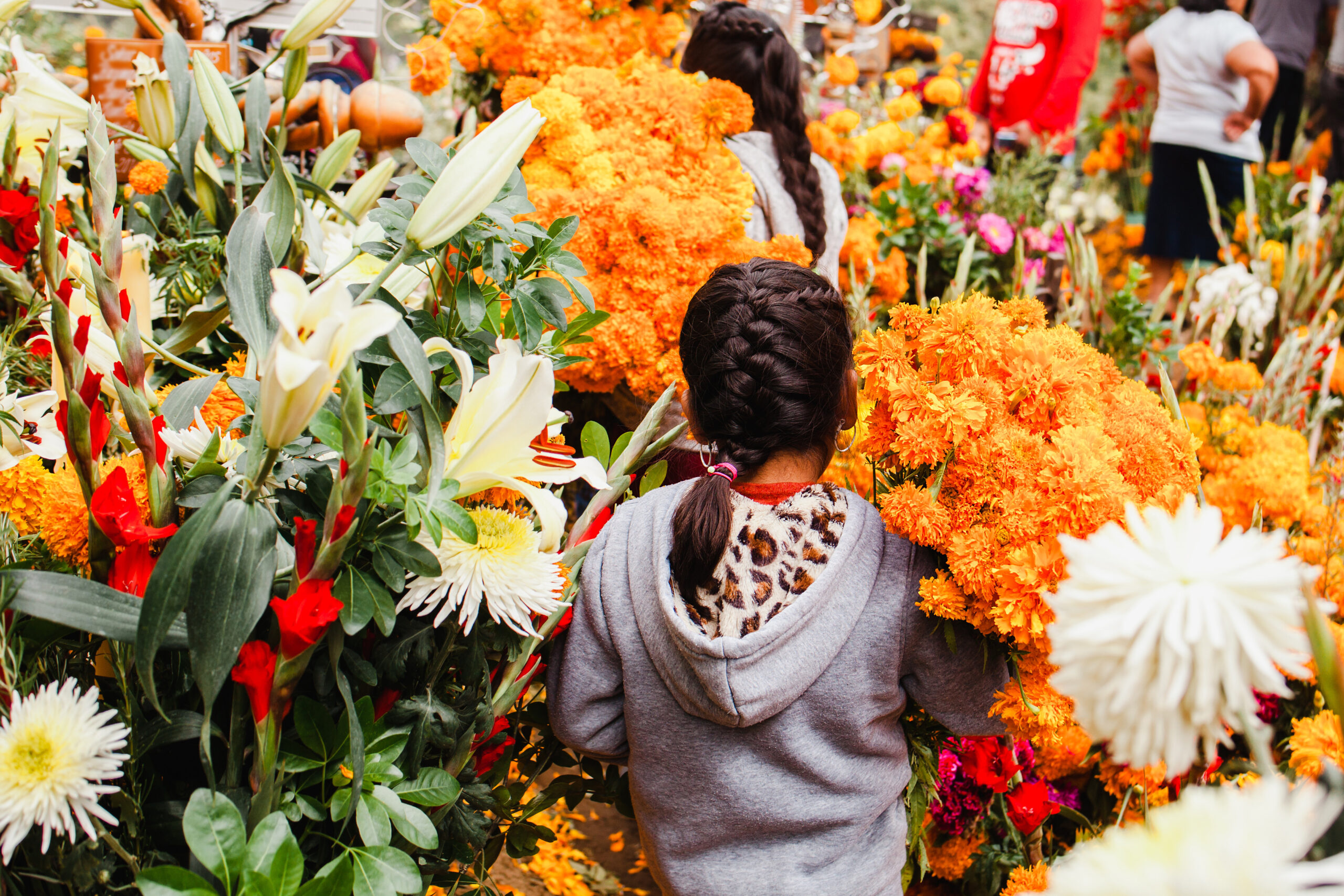
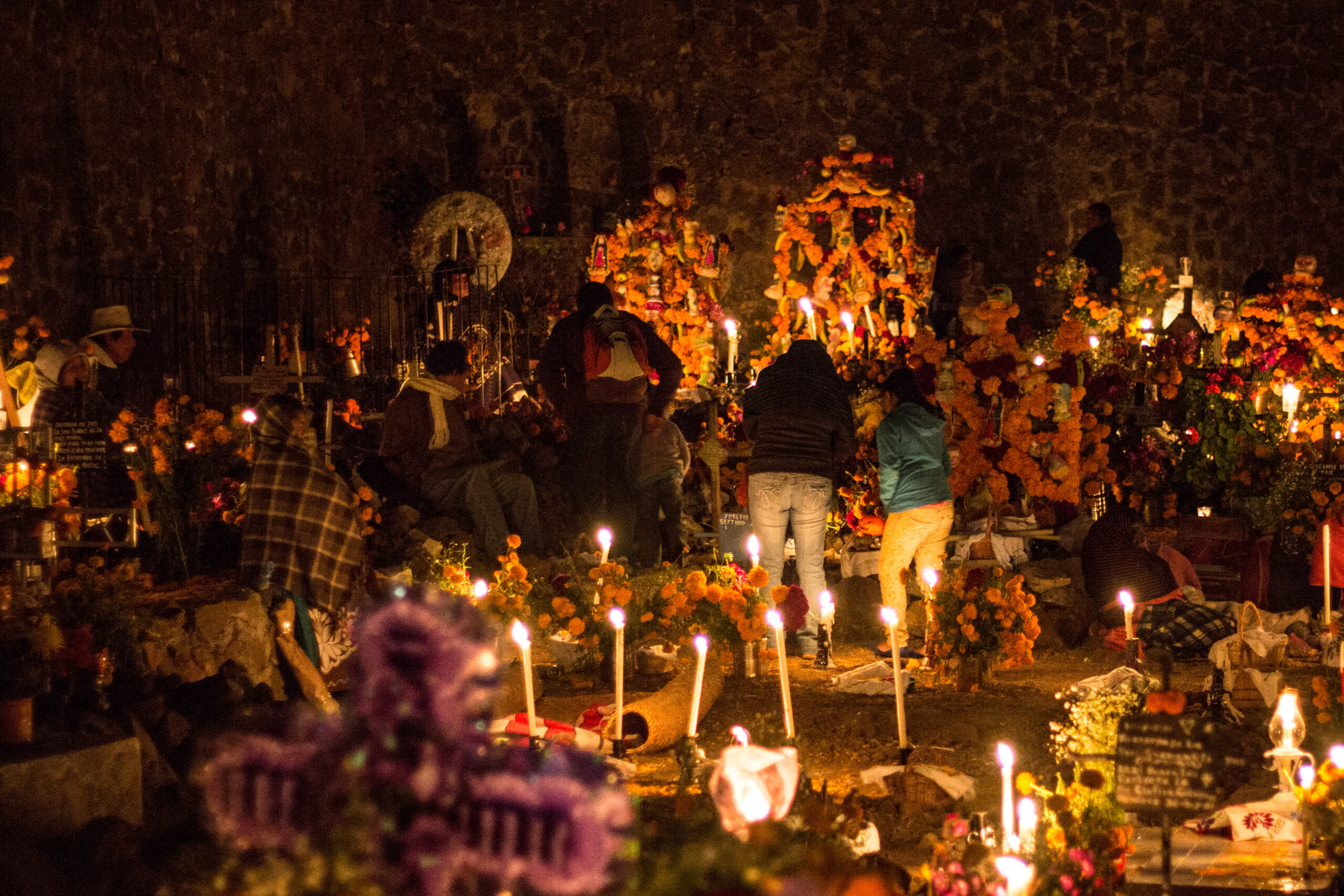
Families honor loved ones who have passed away by creating ofrendas, or altars, decorated with photographs, candles, marigolds, favorite foods, and meaningful keepsakes. These ofrendas can be expressed in the home or some parts of Mexico will open their cemeteries for ofrendas to be decorated on-site where loved ones are buried during annual celebrations. These offerings serve as expressions of love and remembrance, welcoming the spirits of loved ones into the present according to tradition.
As October comes to a close, many Americans celebrate Halloween with costumes, haunted houses, and spooky traditions.
Halloween and Día de los Muertos share historical connections to traditions surrounding death and remembrance, their modern celebrations have taken distinctly different paths. In the United States, the origins of Halloween include traditions honoring the dead and marking the changing seasons, modern Halloween celebration has evolved into a holiday largely traditionally centered around costumes, haunted houses, horror, and playful encounters with the macabre and supernatural.
Día de los Muertos, by contrast, has maintained a strong connection to its cultural traditions; this Mexican holiday’s main focus is honoring loved ones who have passed through colorful ofrendas, meaningful rituals, storytelling, music, and shared memories. At its heart, Día de los Muertos offers an opportunity to celebrate life, maintain connections across generations, and approach grief through love, remembrance, and community.
For Yakahiris, the tradition is also an invitation to slow down.
“Living in a fast-paced, work-oriented society, it can be easy to forget to slow down and truly appreciate life’s moments,” she shared.
From gathering meaningful objects to preparing her altar, every part of the celebration offers an opportunity for reflection.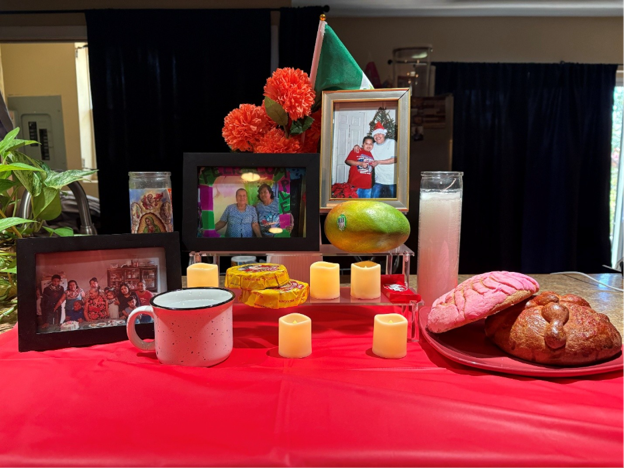
“Setting up the altar is especially therapeutic for me. I prefer to do it alone in a quiet space, allowing myself uninterrupted time to connect with my loved ones.”
Throughout the celebration, Yakahiris spends time at her altar each morning, lighting candles, refilling water, and observing moments of silence.
When the celebration ends, she follows a personal tradition of gathering the remaining cempasúchil petals (vibrant petals from the marigold flower) and releasing them into the wind, symbolically guiding her loved ones back to the spiritual world until the following year.
These rituals provide meaningful opportunities to remember, reflect, and maintain an emotional connection with those who are no longer physically present.
Keeping Family Stories Alive Across Generations
For families separated by geography, immigration, or the passing of loved ones, cultural traditions can help preserve relationships and strengthen connections to family history.
Yakahiris understands this connection firsthand. Many of the relatives she honors through Día de los Muertos passed away before she had the opportunity to meet them.
As a child, Yakahiris listened to stories about her aunts, uncles, grandmother, and other relatives. Even without photographs, these stories helped her imagine their personalities and understand their importance to her family.
Years later, when photographs became available, she was finally able to connect faces with the names and memories she had carried throughout her childhood.
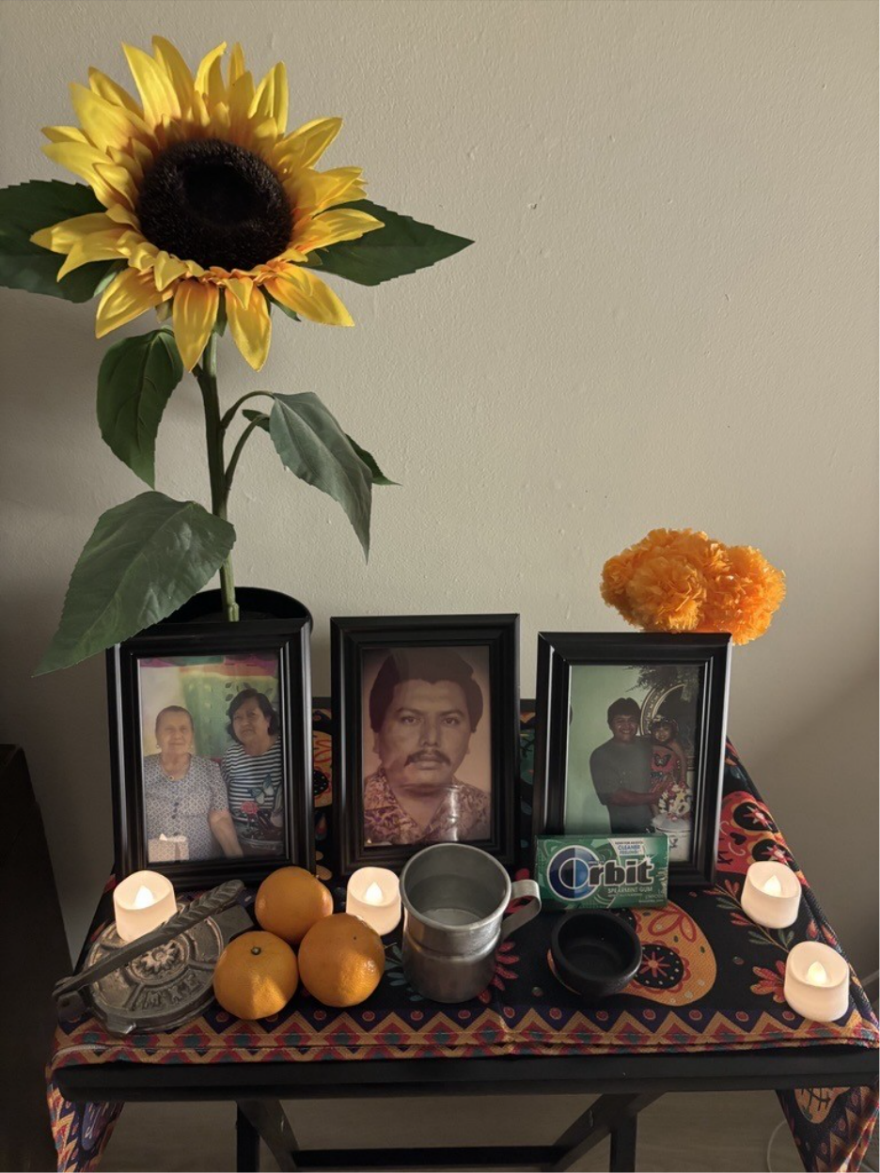
“Traditions have allowed me to stay close to my roots and my family lineage without having gotten to meet some of my loved ones.” explains Yakahiris.
For young people, family storytelling can be an important part of developing cultural identity and a sense of belonging. Learning about previous generations helps children understand where they come from while strengthening connections with the people who continue to shape their lives.
Even when families are separated by distance, shared memories and traditions can help maintain those meaningful relationships.
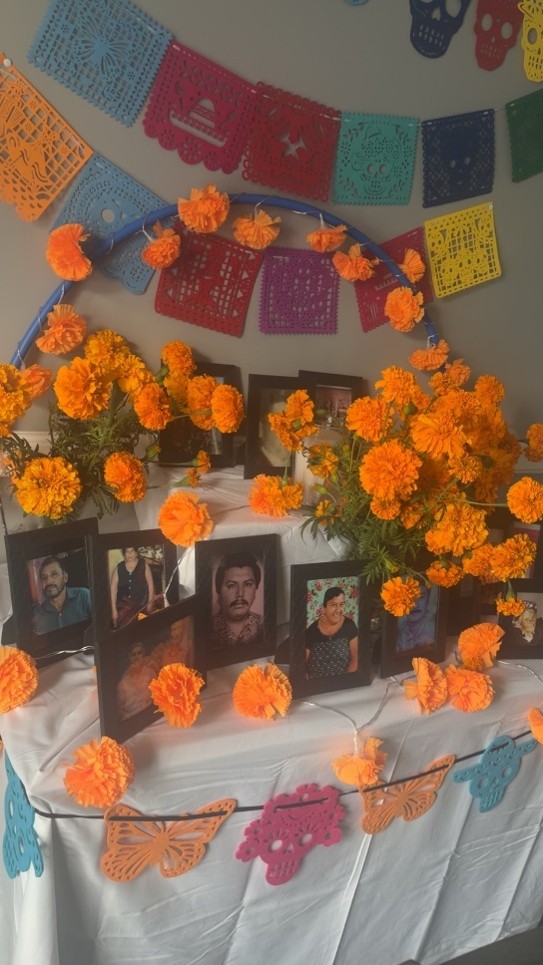
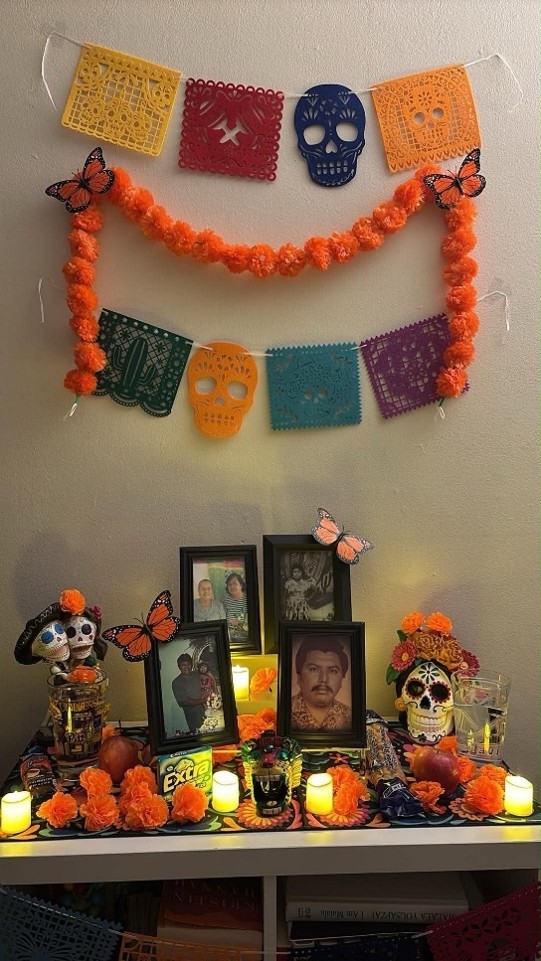
What it’s like for Mom celebrating from afar
For Yakahiris Vazquez’s mother, Día de los Muertos holds cherished memories of growing up in Mexico, where families and neighbors gathered at cemeteries to honor loved ones who had passed away. Preparations included purchasing flowers, decorating gravesites, gathering photographs, and preparing favorite foods and drinks to share with those being remembered.
She recalls how families would gather around their loved ones’ graves, sharing meals, music, stories, and offerings. Neighbors exchanged food, even when they had little to give, creating a meaningful sense of community and togetherness. Marigolds, known as cempasúchil, held special significance. Her grandmother taught her that the flowers helped create a pathway to guide loved ones home during the celebration.
Since immigrating to the United States, maintaining these traditions has become more difficult. Unable to return to Mexico to celebrate alongside her extended family, she deeply misses the experience of gathering at the cemetery and honoring loved ones together. Although she recognizes that smaller altars can be created at home, she acknowledges that these celebrations cannot fully replace the traditions and community connections she remembers.
Despite the distance, she continues honoring her loved ones through photographs, saved messages, audio recordings, and everyday memories. For her, remembering is a way of keeping family members present in her life, even after their passing.
Passing these traditions to her children has become especially important. Through stories and photographs, she has introduced them to relatives they never had the opportunity to meet, helping preserve their family history and connection to their Mexican heritage.
Her reflections also offer a deeply personal perspective on grief. She acknowledges that the pain of losing someone may never completely disappear, but can be honored with the love she has for her children and family gives her strength to continue moving forward.
Ultimately, she hopes future generations will continue celebrating Día de los Muertos, honoring their ancestors, and preserving the stories that connect them to their roots. For her, the tradition represents more than remembrance. It is an expression of enduring love, family connection, and the belief that those we have lost remain with us through the memories we carry in our hearts.
The Next Generation: Finding Joy, Identity, and Connection Through Día de los Muertos
For Yakahiris Vazquez’s brother, Día de los Muertos represents an opportunity to honor loved ones, preserve family traditions, and celebrate the memories that connect generations.
Born in Mexico and raised in the United States from an early age, he grew up navigating two cultures while maintaining a strong connection to his Mexican heritage. Through his parents’ encouragement, he learned to appreciate and confidently preserve his family’s traditions and embrace his cultural identity, and he hopes our younger generations know it is ok to preserve your cultural traditions while assimilating to new ones.
Unlike his sister, who was born in the United States, his early childhood began in Mexico. Their different experiences offer insight into how siblings within the same family can develop distinct relationships with their cultural heritage.
For him, Día de los Muertos provides a joyful and peaceful way to remember loved ones while making space for grief. Through storytelling, family gatherings, and cultural celebrations, he continues honoring relatives who have passed away and hopes to preserve these traditions for future generations.
Growing Up Between Two Cultures
For some first-generation Americans, preserving cultural traditions means navigating different experiences and expectations at home, at school, and within their communities. It can also mean finding opportunities to share their heritage and help others better understand its significance.
One misconception Yakahiris hopes to challenge is the idea that Día de los Muertos is simply another version of Halloween. Although the holidays occur close together on the calendar, their cultural meanings and traditions are distinct.
Yakahiris shares that she has encountered this misunderstanding before and has taken opportunities to explain that Día de los Muertos is not centered on fear or horror, but on honoring loved ones, celebrating their lives, and keeping family memories and cultural traditions alive.
Celebrating Life While Making Space for Grief
For Yakahiris, the beauty of the tradition lies in its ability to embrace the many emotions associated with grief.
“While remembering our loved ones often brings different emotions, such as sadness, loss, and more. Dia de los Muertos welcomes these emotions along with a celebration and honoring our loved ones.”
Rather than asking families to set aside their sadness, the celebration creates opportunities to acknowledge loss while remembering the laughter, joy, and meaningful experiences shared with loved ones.
This perspective offers an important lesson for supporting children and teens through grief.
Young people do not always have the language to explain what they are feeling after a loss. They may experience sadness, confusion, anger, or even moments of happiness while remembering someone they love.
Providing space for these emotions without judgment can help young people understand that grief is not something they must navigate alone.
Family traditions, storytelling, creative expression, and supportive relationships can offer meaningful ways to process these experiences.
Día de los Muertos reminds us that grief and joy are not opposing emotions. Both can be expressions of the love and connection we continue to carry.
What Día de los Muertos Can Teach Us About Grief and Mental Wellness
Grief is a natural response to loss, but conversations about death can sometimes feel uncomfortable, especially when adults are unsure how to discuss difficult emotions with children.
Día de los Muertos offers a cultural perspective in which remembrance can include sadness, gratitude, joy, and celebration.
For Yakahiris, the holiday provides space to experience these emotions while honoring the relationships that continue to influence her life.
“While remembering our loved ones often brings different emotions, such as sadness, loss, and more, Día de los Muertos welcomes these emotions along with a celebration and honoring our loved ones.”
This perspective offers an important lesson about emotional wellness: grief and joy do not have to exist separately.
Remembering someone we love may bring sadness, but it can also bring comfort through familiar stories, laughter, and meaningful traditions.
For children and teens, opportunities to talk about loss, ask questions, and express emotions can help them better understand their experiences.
Family rituals, storytelling, and remembrance can also provide a sense of continuity and connection during difficult times.
While no single tradition removes the pain of grief, having supportive relationships and meaningful ways to remember loved ones can help young people feel less alone.
Finding Hope Through Remembrance and Connection
One of the most meaningful aspects of Día de los Muertos is its reminder that the influence of those we love continues through the stories we share, the lessons we carry, and the traditions we preserve.
For Yakahiris, maintaining this celebration is about more than honoring the past. It is also about ensuring that future generations have opportunities to understand their heritage and feel connected to the people who came before them.
Her experiences demonstrate how cultural traditions can become sources of strength, particularly for young people navigating questions about identity, belonging, and family history.
Día de los Muertos offers another reminder of why these connections matter. When young people have opportunities to share their stories, celebrate their identities, and talk openly about difficult experiences, we help create communities where they feel heard, valued, and supported.
A Tradition Rooted in Love and Hope
For families who celebrate Día de los Muertos, the holiday is an opportunity to honor those who have passed while celebrating the love and memories that remain.
Yakahiris story reminds us that cultural traditions can connect generations, preserve family histories, and create meaningful opportunities for emotional reflection near or afar.
We thank Yakahiris and her family for sharing their experiences with us and would love to hear more about how you celebrate death or navigate grief with hopeful traditions.
Whether through an ofrenda, a family recipe, a photograph, or a story passed down through generations, remembrance allows us to carry the influence of loved ones forward.
Grief may be part of our story, but so are love, connection, resilience, and hope.
As we recognize Día de los Muertos, we celebrate the beauty of traditions that remind us that remembering those we love can help us appreciate the lives we share today.