Phone-Free Schools, Connected Learning: What Pennsylvania’s New Bell-to-Bell Cell Phone Legislation Means for Students
As Pennsylvania moves toward implementing a statewide bell-to-bell cell phone policy in schools, communities across the Commonwealth are engaging in an important conversation about technology, learning, mental health, and student well-being. At Touchstone Foundation, we support healthy youth development and thriving communities. This moment offers an opportunity to focus not only on reducing distractions, but on creating environments where young people can learn, connect, and flourish.
Pennsylvania Takes Action
Pennsylvania lawmakers recently approved legislation requiring schools to adopt “bell-to-bell” policies that prohibit student cell phone use throughout the school day. Under Senate Bill 1014, schools will be required to establish policies limiting access to personal mobile devices from the first bell until dismissal, while still allowing exceptions for medical needs, Individualized Education Programs (IEPs), language translation services, and certain instructional purposes. Implementation is expected by the 2027-28 school year, with local districts determining how policies will be enforced. [palegis.us], [6abc.com]
The legislation reflects growing concerns among educators, parents, and policymakers about the impact of smartphones on classroom learning, student attention, social interactions, and mental health. Supporters argue that students learn best when they can focus on instruction, engage with peers, and participate fully in the school community without the constant pull of notifications and social media. [6abc.com], [phillyvoice.com]
More Than a Screen Time Debate
While headlines often focus on screen time, recent research suggests that the conversation is far more nuanced.
In September 2026, the American Psychological Association (APA) released its Expert Report on Children’s and Adolescents’ Learning with Educational Technology, offering evidence-based recommendations for educators, families, and policymakers. The report emphasizes that technology itself is neither inherently good nor bad for learning. Instead, outcomes depend on how technology is used and whether it supports meaningful educational goals. [apa.org], [apa.org]
One of the report’s most important findings is that engagement does not necessarily equal learning. Students may spend significant time interacting with digital tools, complete activities, or appear highly engaged, yet retain little knowledge once the technology is removed. The APA encourages educators and families to evaluate technology based on actual learning outcomes rather than screen time, participation rates, or entertainment value. [apa.org], [govtech.com]
The report also notes that technologies designed to capture attention can sometimes interfere with learning, especially when they encourage multitasking or frequent interruptions. It recommends choosing tools that support focused attention, research-based learning practices, and meaningful human interaction. [apa.org], [apa.org]
Why This Matters for Student Well-Being
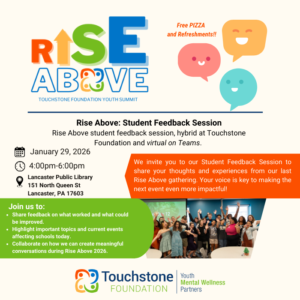
At Touchstone Foundation, we know that learning and mental health are deeply connected. As we recently launched our Rise Above program in schools throughout Lancaster County, students report wanting more opportunities for connection, belonging, and purpose. In creating group norms, students agree to put away their phones.
Many students today navigate academic pressures alongside social media influences, cyberbullying, constant digital connectivity, and concerns about fitting in. Educators have increasingly reported that smartphones can contribute to distraction, anxiety, and difficulties maintaining focus during the school day. The Pennsylvania legislation seeks to provide students with a protected space during school hours where they can concentrate on learning and engage more fully with those around them. [6abc.com], [phillyvoice.com]
Research also suggests that face-to-face relationships remain one of the most important contributors to healthy adolescent development. That’s where our Rise Above program thrives. In Rise Above, students explore mental wellness topics through creative activities and self-expression, offering opportunities to explore their connection with each other.
The APA report highlights that educational technology works best when accompanied by strong human relationships and adult guidance. Technology should support learning, not replace the connections students have with teachers, mentors, families, and peers. [apa.org], [apa.org]
Finding the Right Balance
A bell-to-bell cell phone policy is not about eliminating technology from education. In fact, the APA report recognizes that educational technology can be highly effective when used intentionally, aligned with learning goals, and supported by evidence-based practices. The challenge is distinguishing between technology that enhances learning and technology that simply captures attention. [apa.org], [apa.org]
As schools develop their local policies, communities have an opportunity to ask important questions:
- How can we create classrooms that encourage focus and meaningful engagement?
- What role should technology play in supporting learning?
- How can we help young people develop healthy digital habits?
- How do we balance connectivity with opportunities for human connection?
Looking Ahead
Pennsylvania’s new legislation represents more than a policy change. It reflects a broader shift in how we think about technology, education, and youth well-being.
By reducing distractions during the school day while promoting thoughtful and evidence-based technology use, schools can help students strengthen their attention, build stronger relationships, and engage more deeply in the learning process. At the same time, families, educators, and community organizations all have a role in helping young people develop the digital literacy and healthy habits they will need throughout their lives.
As implementation moves forward, Touchstone Foundation remains committed to supporting conversations that promote resilience, mental wellness, and positive developmental outcomes for children and adolescents. Creating healthy environments for young people requires collaboration, and this legislation offers an important opportunity to rethink how technology can best serve learning, growth, and well-being.
Building Connections Beyond the Screen
Creating healthier learning environments takes more than putting phones away. It takes families, educators, and communities working together to help young people feel connected, supported, and heard.
At Touchstone Foundation, our Rise Above program creates opportunities for middle and high school students across Lancaster County to explore mental wellness, express themselves, and build meaningful relationships with peers and trusted adults. We encourage students to be present, connect with one another, and create a space where everyone has an opportunity to be heard. We’re especially proud that students often choose to put their phones away as part of their shared commitment to meaningful connection.
Families can continue these important conversations at home. Explore our Touchstone Foundation Parenting Series, including a discussion with Dr. Thomas Foley about AI and technology, for guidance on navigating technology’s role in our lives and supporting young people in an increasingly digital world.
Sources:
- American Psychological Association, Children’s and Adolescents’ Learning with Educational Technology (2026) [apa.org], [apa.org]
- Pennsylvania Senate Bill 1014, Bell-to-Bell Mobile Device Policy [palegis.us]
- Pennsylvania school cellphone ban coverage and implementation details [6abc.com], [nbcphiladelphia.com]