2026 Pennsylvania Community and Public Health Conference
What Pennsylvania Families Need to Know About Support Through Healthcare Changes
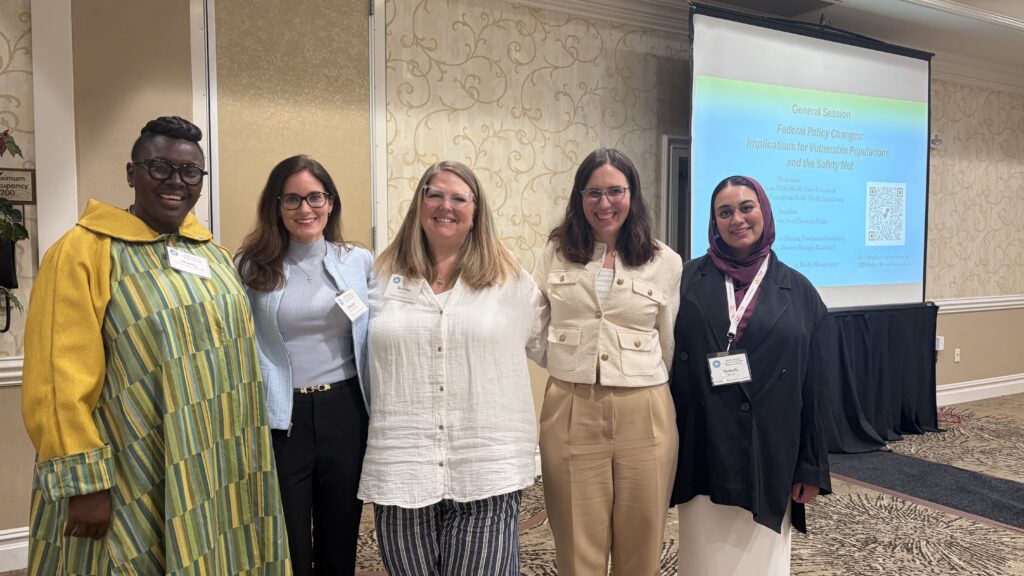
Touchstone Foundation’s Executive Director, Anna Kennedy was recently invited to serve on a panel at the Pennsylvania Public Health Conference, emphasizing the need to integrate public health principles and practices into policies and programs that benefit all Pennsylvania residents and communities.
What is Public Health?
Public Health is the science and art of preventing disease, prolonging life, and promoting health through organized societal efforts, focusing on entire populations of people. Key aspects of public health principles include prevention vs. treatment, population focus, and core functions such as assessment, policy development, and assuring access to health services. Key public health initiatives include vaccination programs, food safety regulations, clean water/air, and workplace safety laws.
The conference was organized by the PA Office of Rural Health, PA Public Health Association, Penn State College of Medicine’s Public Health Program, the Society for Public Health Education- PA Chapter, and the Northeast PA Area Health Education Center.
How does the conference theme “Reimagining Health Care in Pennsylvania” translate into real changes for families who rely on Medicaid?
On July 3, 2025, the US House of Representatives passed a budget reconciliation bill, HR1, previously known as the “One Big Beautiful Bill Act” into law. HR1 changed health care provisions in the way federal funds come to states, including Pennsylvania. Changes are being implemented for Medicaid, Medicare, Health Savings Accounts, and the Affordable Care Act. Some changes took effect in 2025, others in early 2026, and most of the changes won’t occur until 2027.
Many families and young people may not realize that your health insurance coverage is a Medicaid plan. In Pennsylvania, the Department of Human Services managed Medicaid as “Medical Assistance” through COMPASS, also called HealthChoices. HealthChoices includes Physical HealthChoice, Behavioral HealthChoies, and Community HealthChoices. Families and young people who apply for HealthChoices can pick your provider. In the Lancaster region, Medicaid providers include AmeriHealth Caritas PA, Geisinger, Health Partners, Highmark Wholecare (formerly Gateway), and UPMC for You. Families who have children with special needs can access full and free Medical Assistance for children up to age 18 (called PH95). Families and young people who are ineligible for Medicaid can apply for health insurance through the PA marketplace, called Pennie.
Pennsylvania is receiving less funding for Medicaid, for example, HR1 restricts certain immigrant eligibility for Medicaid and the Children’s Health Insurance Program (CHIP). Starting January 1, 2027, families who rely on Medicaid will need to reapply more frequently (every 6 months), and individuals ages 19-64 who apply for Medicaid must be working or participating in qualifying activities for at least 80 hours per month or attending school half-time to qualify for Medicaid coverage.
What should parents understand right now about how public health policies could affect their families’ access to health care services?
Many families and young people may have questions and concerns about how HR1 could affect their eligibility for health care, whether covered under Medicaid, Medicare, or in the Pennie marketplace. Among these questions, families and young people may be confused about the new requirements and exemptions. Applying for health care, which is already challenging, may become more difficult as additional documentation will be required.
If you need health coverage or do not receive it from your employer, you may be eligible for one of the following types of coverage in PA:
Free health coverage for low-income Pennsylvanians (Known as Medicaid, Compass PA, or Medical Assistance)
Free or low cost health coverage for children under 19 (The Children’s Health Insurance Program or CHIP)
Healthcare you can purchase on your own. 9 out of 10 people qualify for financial assistance! (Known as Pennie, or Marketplace Coverage)
Healthcare programs for people with disabilities, such as Medical Assistance for Workers with Disabilities (MAWD), Home- and Community-Based Services (HCBS), or Medicare
Health coverage for people over 65 (Medicare)
Additional Questions? Call or text Pennsylvania’s Health Access Network’s helpline at (877) 570-3642
Many families feel overwhelmed by healthcare changes—what would you say toreassure Medicaid recipients that they won’t lose access to care?
If you are in doubt, please reach out for help. Families and young people with Medicaid coverage can contact the PA Health Access Network (PHAN) for assistance, especially if you have been denied coverage in the past. You can also contact your health insurance provider directly. Pennie has certified applications assistors to help you.
Check your mail and email for notifications, especially about reenrollment. The PA Department of Human Services is mailing “pink packets” to families who have Medicaid coverage, with details about reenrollment. No changes will be made to your Medicaid coverage without notifying you first.
It’s also important to note that many parts of the HR1 law are being challenged by advocates in Pennsylvania and across the US. Your vote matters. If you are concerned about this new law, contact your US Senator or local Representative or weigh in with your vote during this years upcoming elections.
How can parents stay informed without feeling pressured or confused by policy updates?
Many of the HR1 updates are not going to change until 2027 or 2028. Although Pennsylvania is preparing for those changes now, there are ongoing efforts to challenge and change the HR1 changes to Medicaid, including court cases. Nevertheless, it is important to know that you will be notified before any changes can be made to your health insurance.
Parents and young people can follow news and updates from the Pennsylvania Medicaid/Medical Assistance office, https://www.pa.gov/agencies/dhs/resources/medicaid.
Pennie, the PA marketplace and insurance companies, provides high quality health mix of public and private entities insurance plans to Pennsylvanians. Pennie has great resources to assist families and young people who may be losing Medicaid coverage, https://pennie.com/.
The Pennsylvania Health Access Network (PHAN) works to expand and protect access to high-quality, fair, and affordable healthcare across PA, https://www.pahealthaccess.org/get-help/.
What do you wish every parent understood about their mental health benefits for children under Medicaid?
It is important for parents and young people to know that Medicaid coverage is often more comprehensive than many employer-based private/commercial insurance plans. There should be no shame or hesitation in accessing Medical Assistance/Medicaid. Every person deserves access to high-quality, affordable, and accessible medical care- this includes mental health care.
Medical Assistance/Medicaid includes coverage for Behavioral HealthChoices, which covers therapy, counseling, and substance use treatment services in Pennsylvania. Although the provider is different from the Physical HealthChoices company’s name, the services are still comprehensive, high-quality care.
How are we working to make sure families don’t fall through the cracks during these changes?
At Touchstone Foundation, we are advocating for Medicaid coverage, to ensure that families- parents, children, and young people- have access to healthcare. Mental health is health, so it’s important for families to be able to afford to go to therapy. Medicaid coverage is essential for families whose incomes mean that they cannot afford the additional cost of healthcare.
Advocacy takes time. It’s the long-term work of changing policies so that every family and child who needs healthcare can get the help they need.
We are also helping families afford their copays and deductibles- families with private/commercial, employer-based healthcare plans or plans from the Pennie marketplace. For families and young people who are not eligible for Medicaid, we can help lower those costs for therapy and counseling. Our Mental Health Access Assistance program helps families and young adults afford to go to therapy. We also support families who have Medicaid coverage to find a therapist that fits their needs/preferences.
What message would you share with parents who are worried about keeping their children in therapy?
Therapy works, and treatment is effective. In therapy, children and families learn coping skills and strategies for long-term success. It takes time to change habits, unlearn old patterns, and relearn new tools to cope with difficult situations and emotions. Sometimes children need therapy alongside medication, and that’s ok.
Our hope is that families and young people will be empowered to advocate for themselves and their families, to find a great therapist who supports them in the mental wellness journey. For many families and young people, therapy may take six months to a year or more. We want to help make that possible by covering the cost of those visits.
If there’s one action you would encourage every Medicaid family to take after this conference, what would it be?
Healthcare coverage is essential to ensure that you have a safe place to go for healthcare, including therapy. Medicaid covers those costs for you and your family.
Finding a therapist and going to therapy can help kids, families, and young people learn coping skills for long-term mental well-being. Going to therapy works, and it can prevent a mental health need from becoming a crisis. If you need help, please reach out, and we can help get you started. Help is here.
Crisis Support & Mental Health Resources
If you or someone you know is experiencing a mental health crisis or needs immediate support, help is available.
988 Suicide & Crisis Lifeline
Call or text 988 anytime for free, confidential support 24/7.
Crisis Text Line
Text HOME to 741741 to connect with a trained crisis counselor.
Pennsylvania Health Access Network (PHAN)
Support navigating Medicaid, Pennie, and healthcare access questions.
https://www.pahealthaccess.org/get-help/
Touchstone Foundation Mental Health Access Assistance
Learn more about support for therapy copays, deductibles, and finding care. https://touchstonefound.org/accessassistance/
Nonimmigrants, those with Temporary Protected Status (TPS), short-term parolees (those granted parole for less than one year), asylum applicants, those granted Deferred Action for Childhood Arrivals (DACA), unauthorized immigrants, and various other classes of noncitizens granted temporary permission to remain in the United States are nonqualified aliens. Individuals with these statuses are generally barred from Medicaid and CHIP (8 U.S.C. §1611), with three exceptions: https://www.congress.gov/crs-product/IF11912#_Ref80350068
Changes to Federal Health Coverage Eligibility Under HR1
Beginning in 2027, changes under the One Big Beautiful Bill Act (HR1) will significantly narrow which non-citizens qualify as “lawfully present” for Affordable Care Act premium tax credits and cost-sharing reductions. Eligibility will generally be limited to lawful permanent residents, certain Cuban and Haitian entrants, and Compact of Free Association residents. Groups previously eligible—including certain refugees, asylees, work and student visa holders, individuals with Temporary Protected Status, trafficking and crime victims, and others—will lose eligibility beginning January 1, 2027. An additional change beginning in 2026 removes premium tax credit eligibility for certain lawfully present individuals below 100% of the federal poverty level who are subject to Medicaid’s five-year waiting period. These changes may create additional financial barriers to health coverage and access to care for affected individuals and families. Download a reference sheet with changes breakdown HERE.